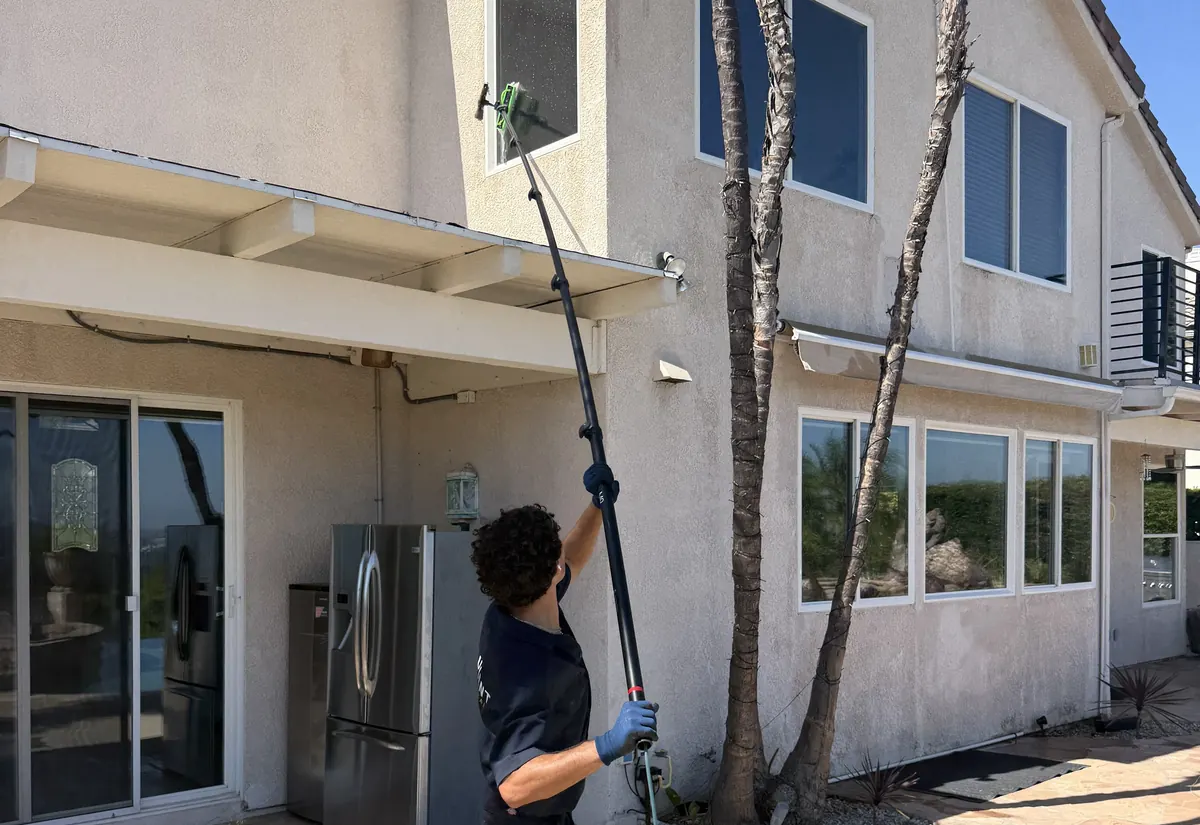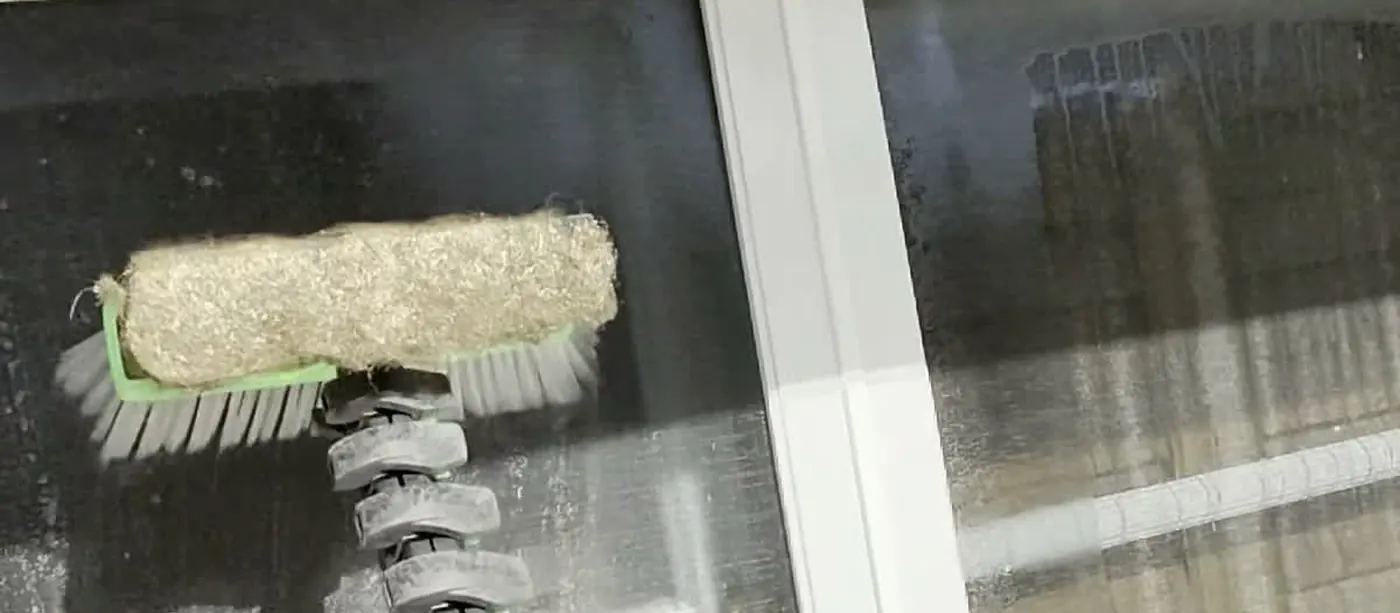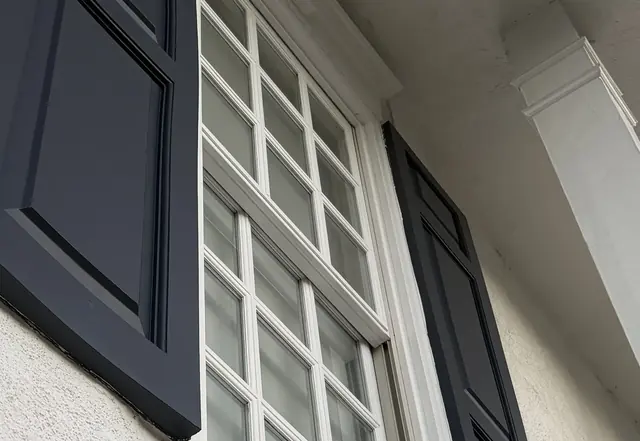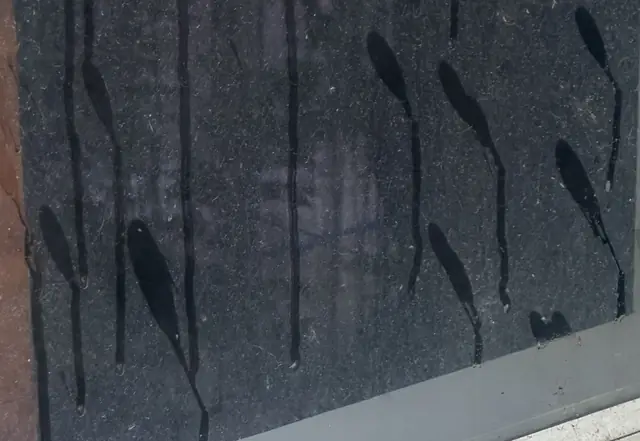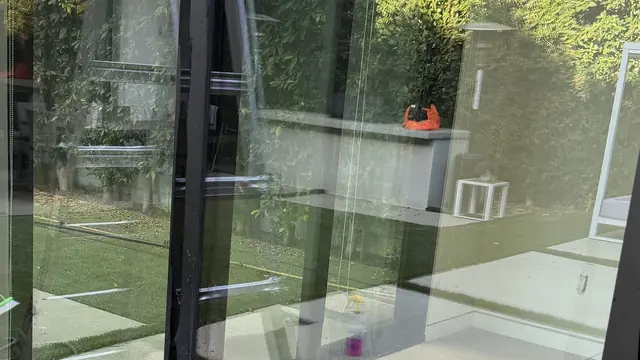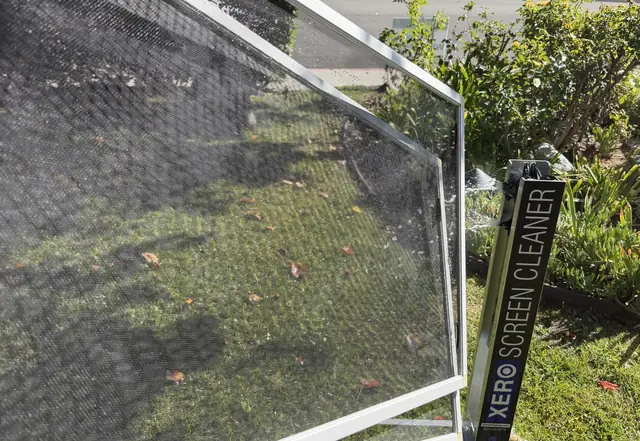
Pure water window cleaning uses water that has been filtered until it contains no dissolved minerals. The water is pumped up a pole to a soft brush, the glass is scrubbed and rinsed, and it is left to dry on its own. With no minerals in the water, the glass dries with no spots.
- Water filtered to 0 parts per million.
- A soft brush on a pole scrubs and rinses the glass.
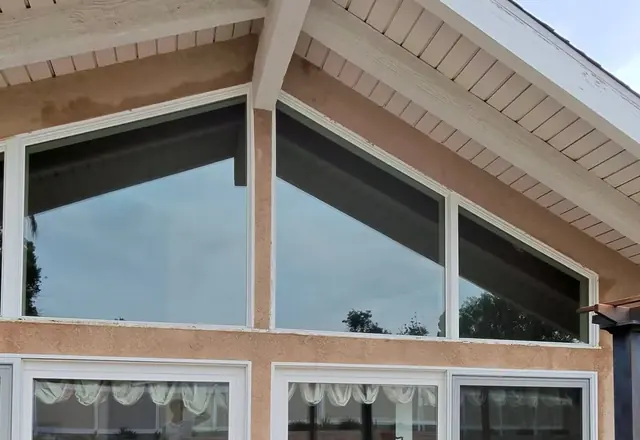
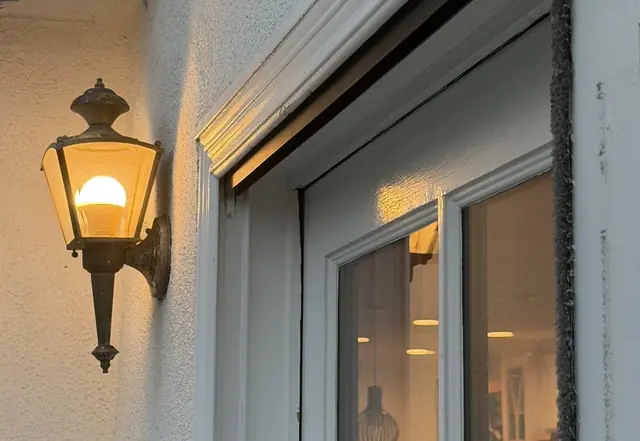
- The glass air dries with no spots and no soap film.
How tap water becomes pure water
Three filters, one after another.
- Carbon filter. Takes out chlorine and sediment so the next stages last longer.
- Reverse osmosis. Pushes water through a membrane that holds back most dissolved minerals.
- DI resin. Polishes what is left, pulling the last minerals out until a meter reads 0 parts per million.
The number that matters is 0
Purity is measured in parts per million of dissolved solids.
Why it dries clear
A water spot is not water. It is what the water was carrying. Take everything out of the water and there is nothing left to leave behind.
Pure water also cleans well on its own. With no minerals in it, it readily picks up dirt and carries it off the glass, so no soap is needed on the outside of the window.
And with no soap, there is no sticky film. Glass cleaned this way tends to stay clean longer, because dust has nothing to cling to.