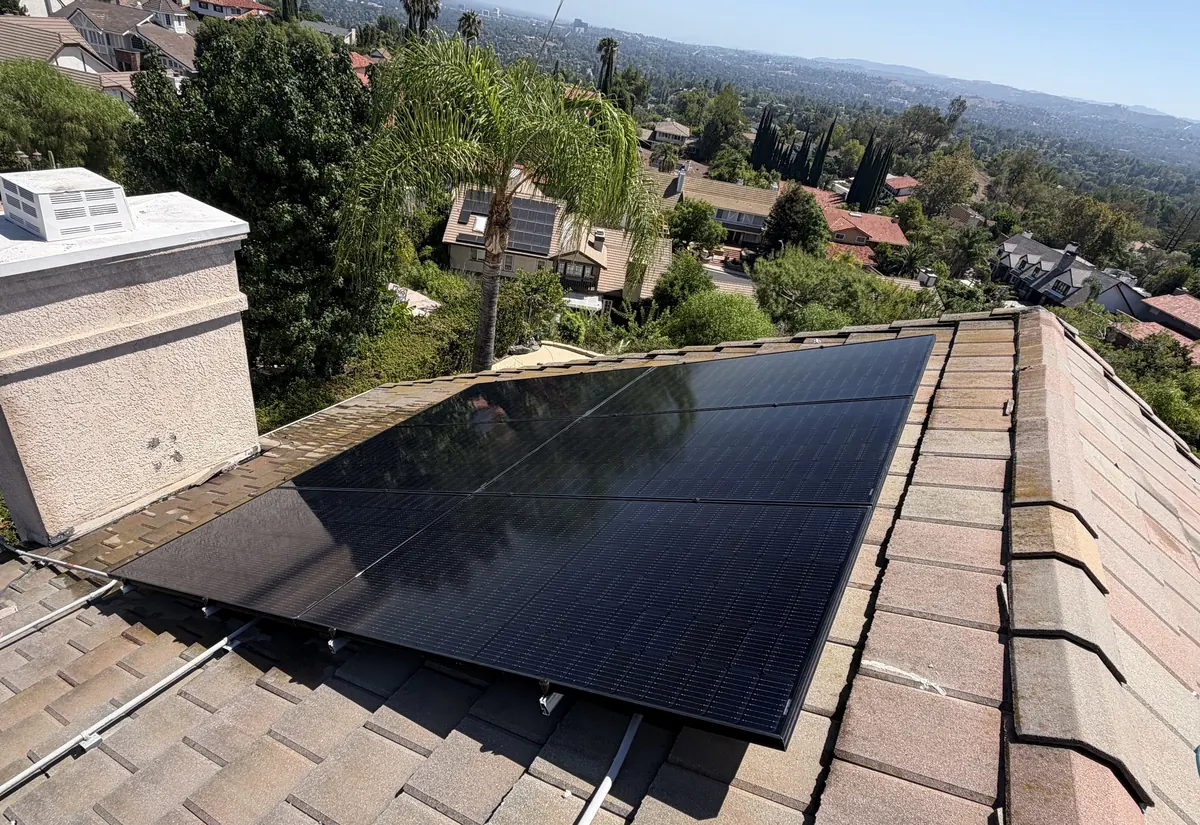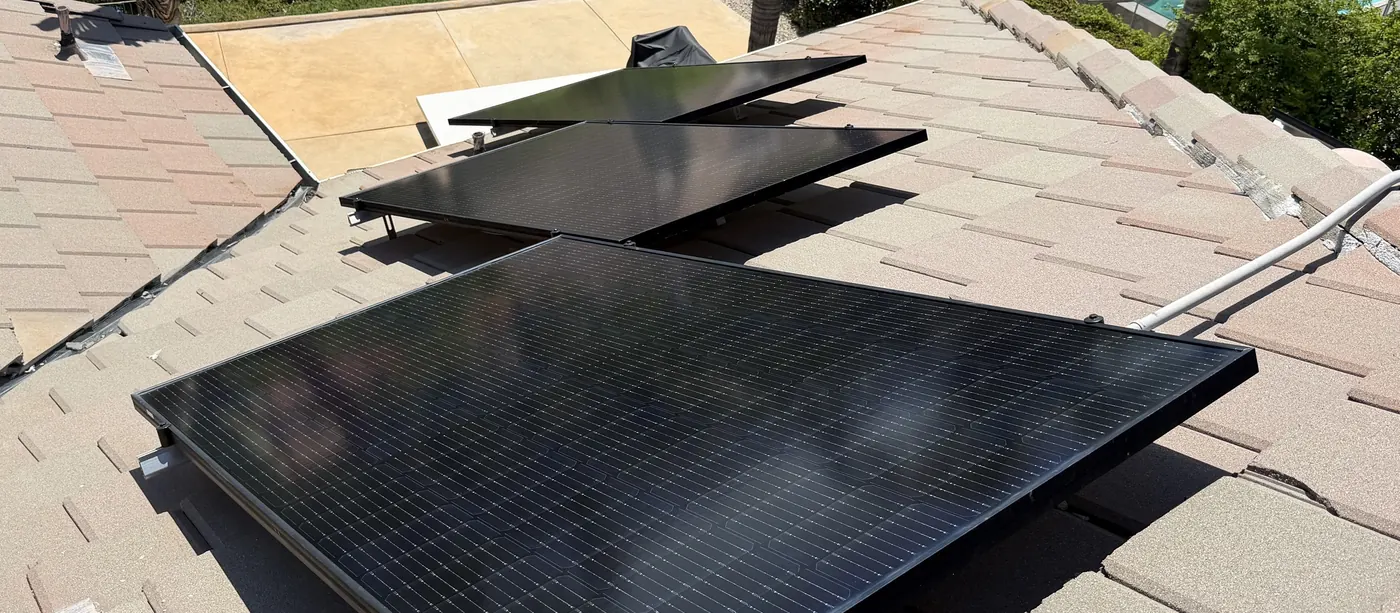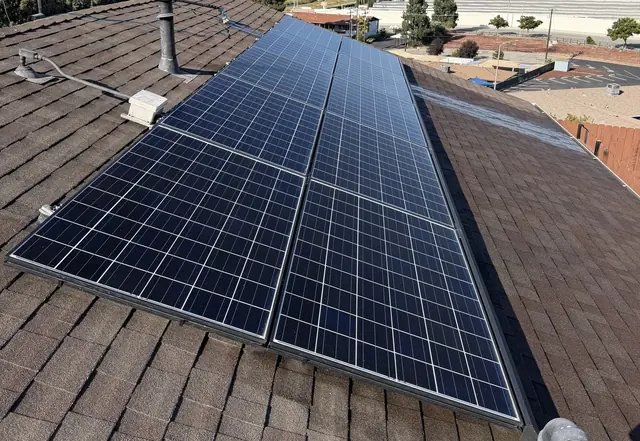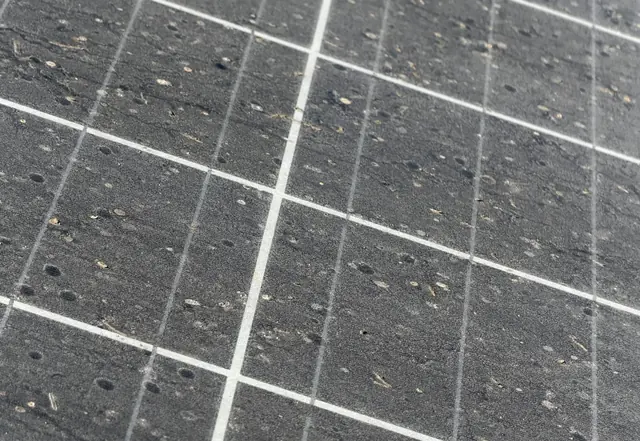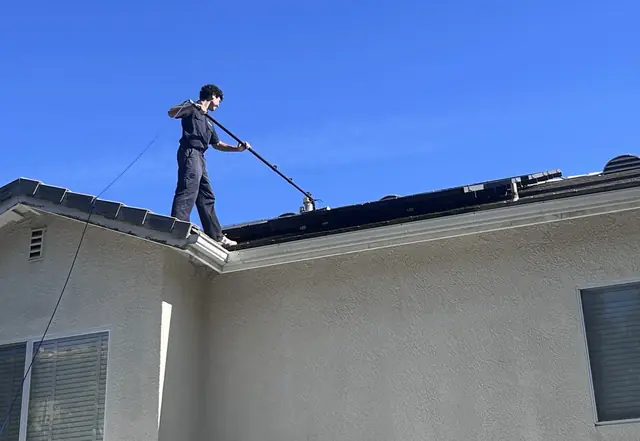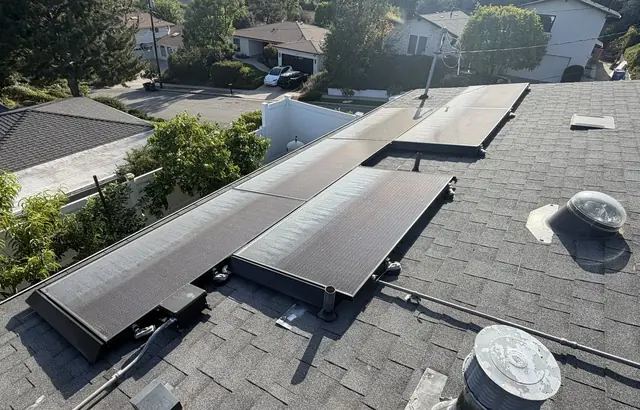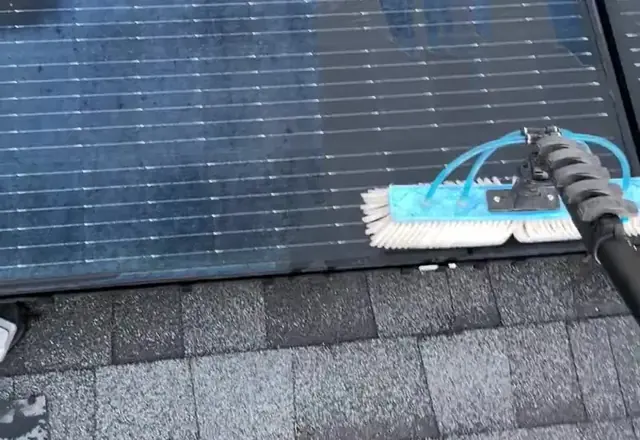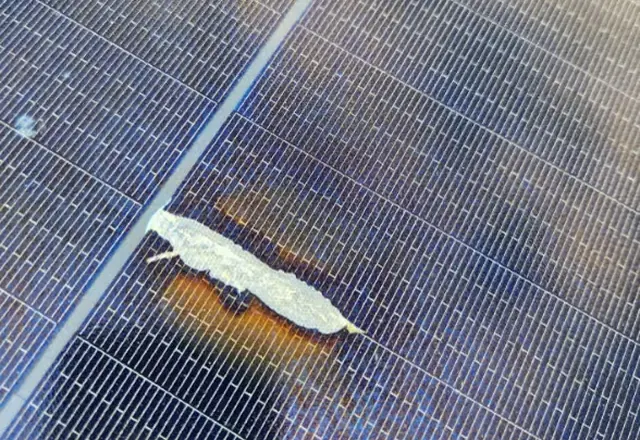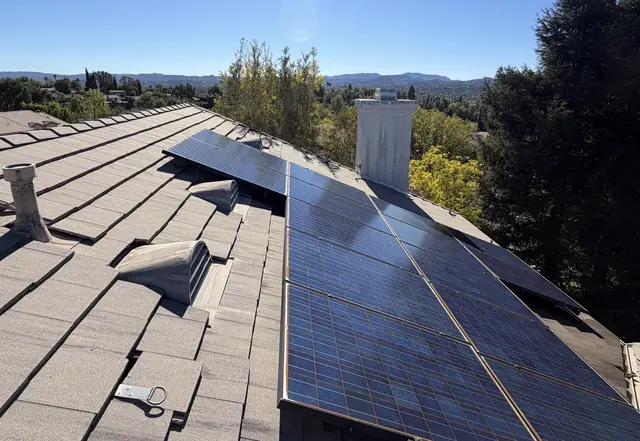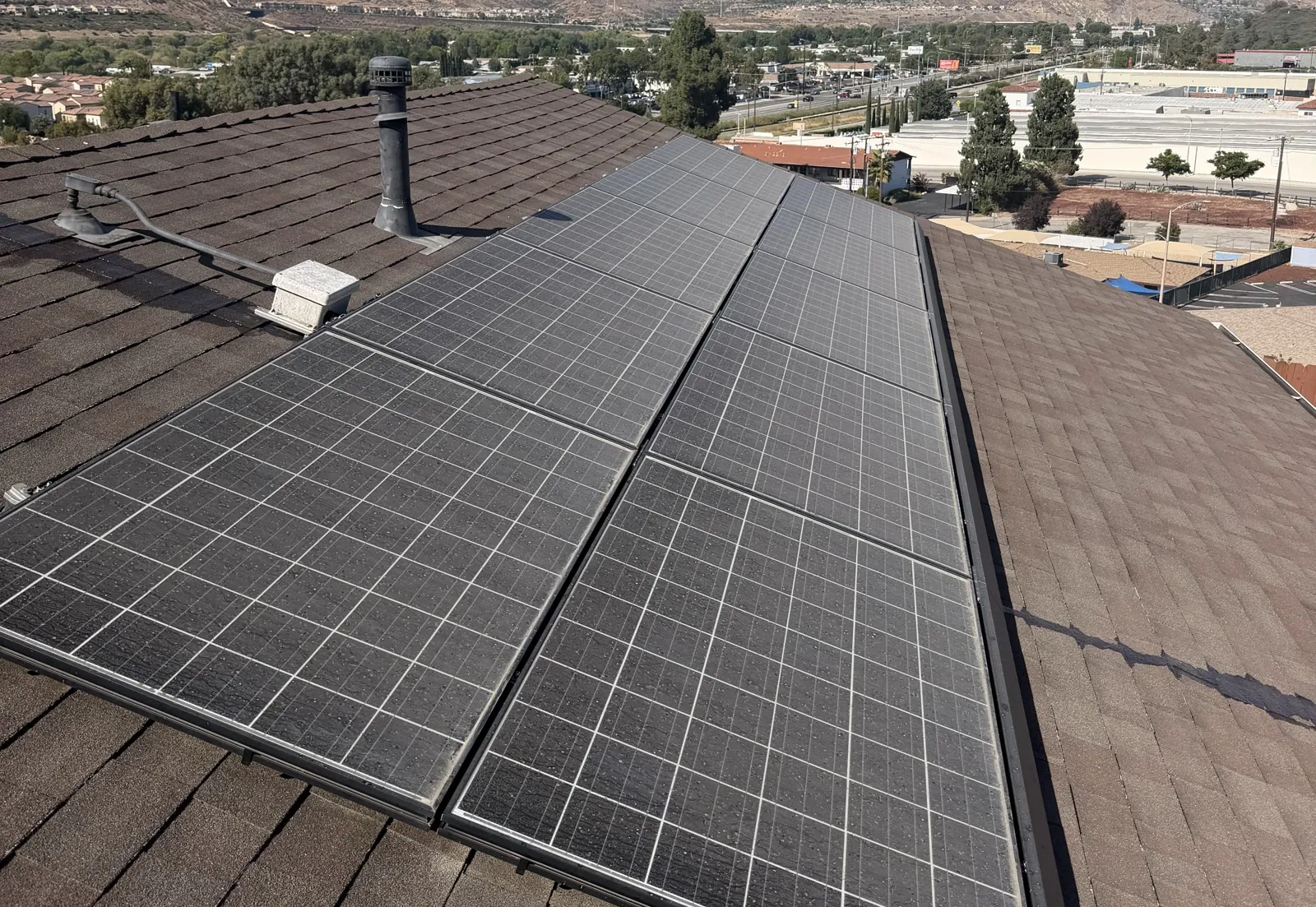
Solar panels need cleaning when dirt is blocking enough light to lower their output. In rainy climates that is rare. In Southern California, where it barely rains from May to October, dust, pollen and bird droppings build up for months, so most systems benefit from a cleaning once or twice a year.
- Yes, when dirt is lowering your output.
- Dry summers here mean months with no rinse.
- Check your monitoring app before you decide.
It depends on where the panels are
A panel makes power from the light that reaches its cells. Anything sitting on the glass blocks some of that light. How much it matters depends on how much builds up and how long it stays.
Where it rains every week or two, panels mostly stay clean on their own. Here the dry season runs half the year, so the film just keeps getting thicker until someone removes it.
Researchers at UC San Diego measured this across California and found panels lost about 7 percent of their output on average over a 145-day stretch with no rain. Some sites lost much less. Panels near dust, traffic or birds lost more.
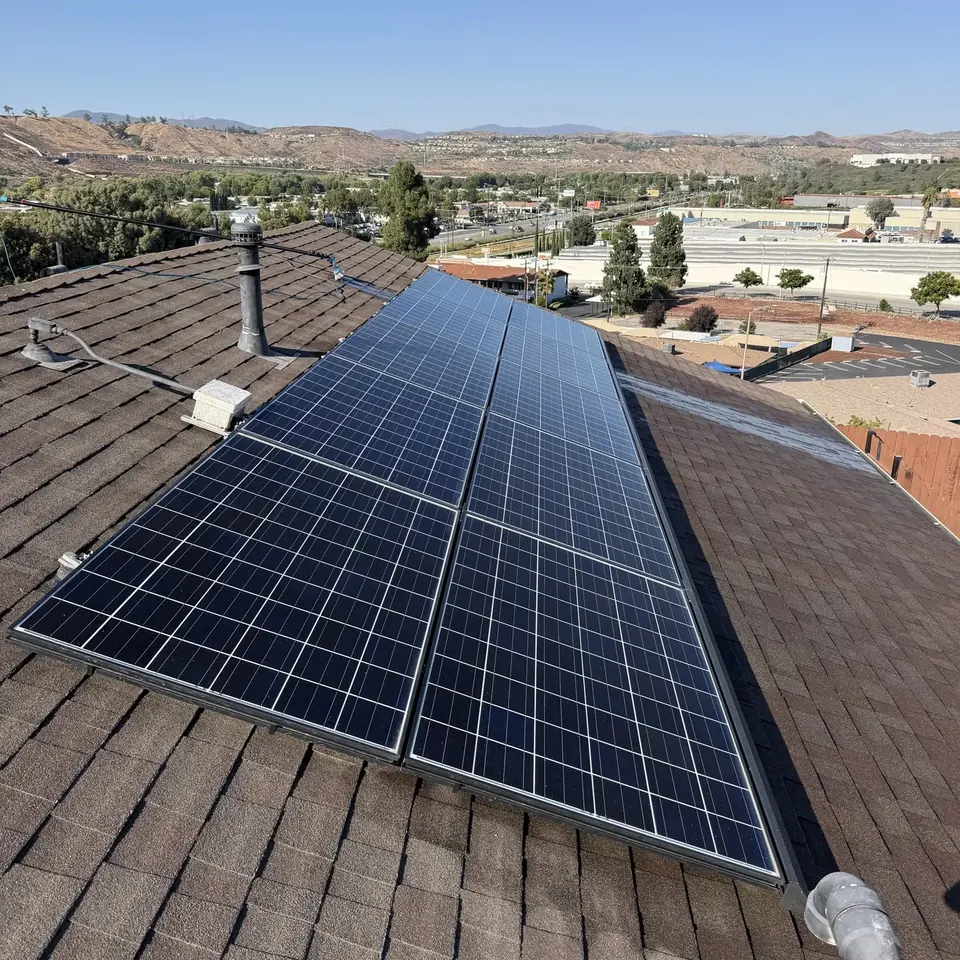
What makes panels dirtier, faster
- Low tilt. Flat and low-slope panels hold dust and let water pool instead of running off.
- Nearby dust. Hillsides, dirt lots, construction and freeways all put fine grit in the air.
- Birds. Droppings block cells completely and do not rinse off in rain.
- Trees. Pollen, sap and leaf litter stick to the glass, especially in spring.
- Long dry spells. Every week without rain adds another thin layer.
- Ash. After a wildfire, ash settles on arrays for miles around.
How to tell if yours need it
Three checks, none of which need a ladder.
- Look at the glass. From the ground on a bright day, a dull gray or brown film means buildup.
- Check your monitoring app. Compare this month to the same month last year. A clear drop on sunny days points to dirt.
- Watch what rain does. If output jumps after a good rain, the panels were dirty enough to matter.