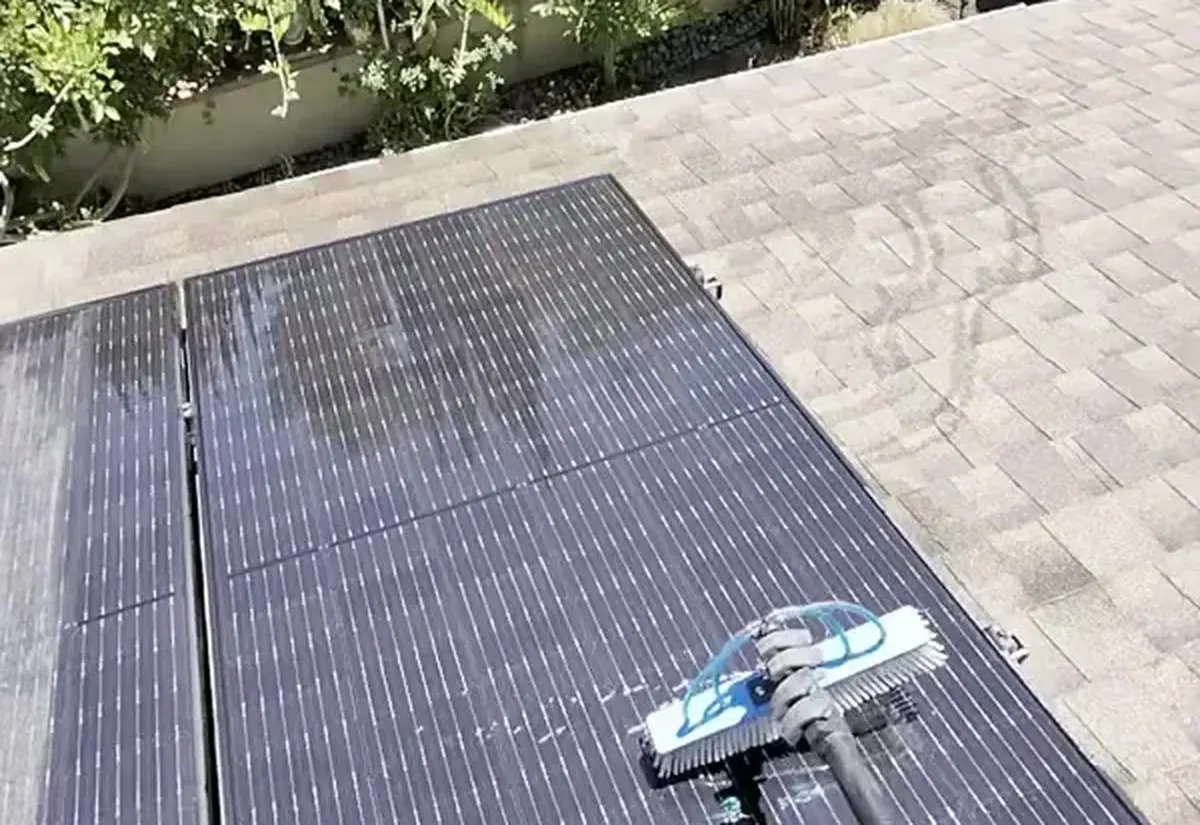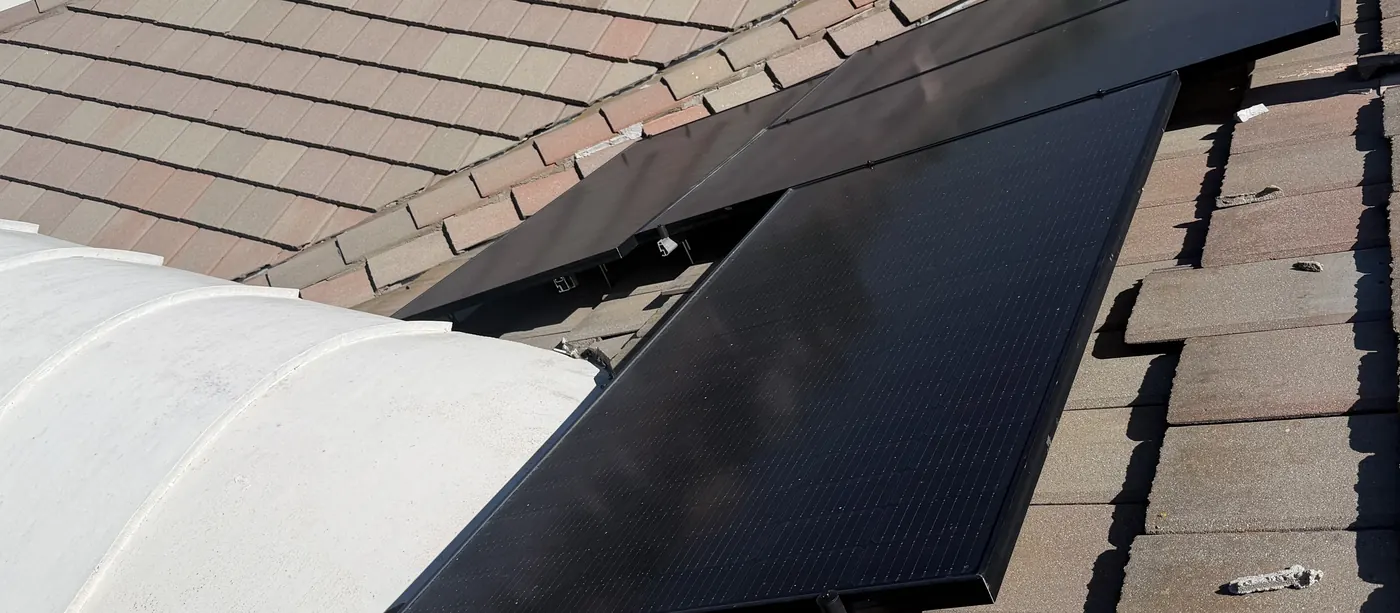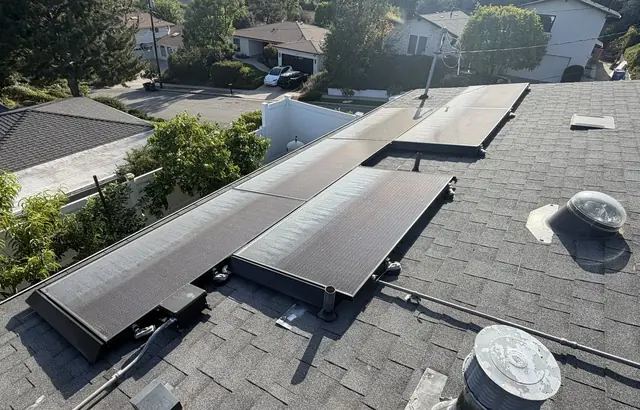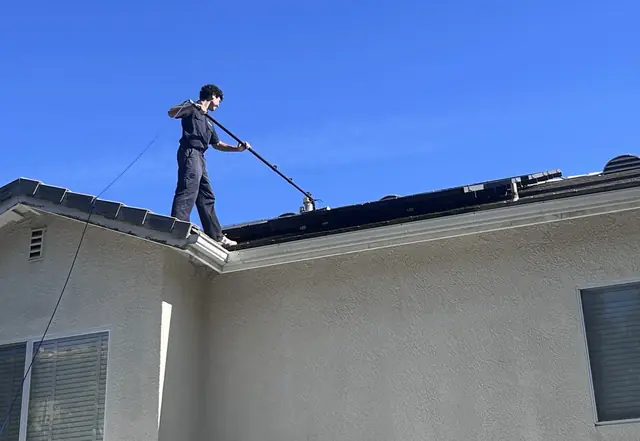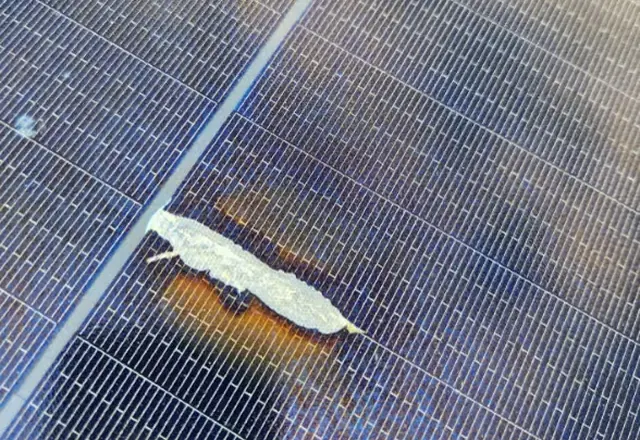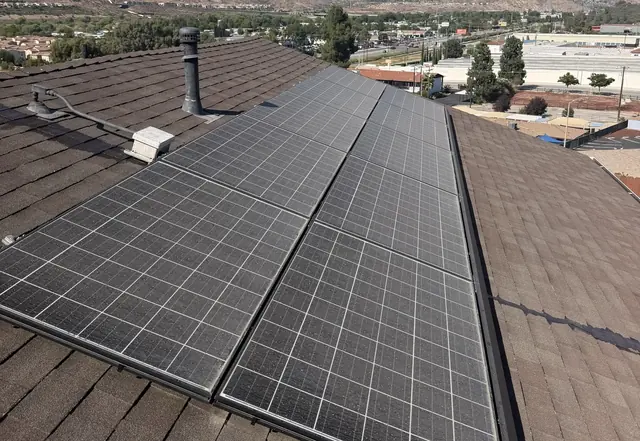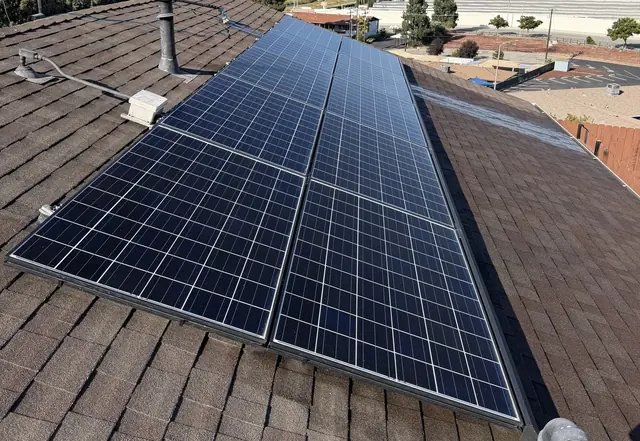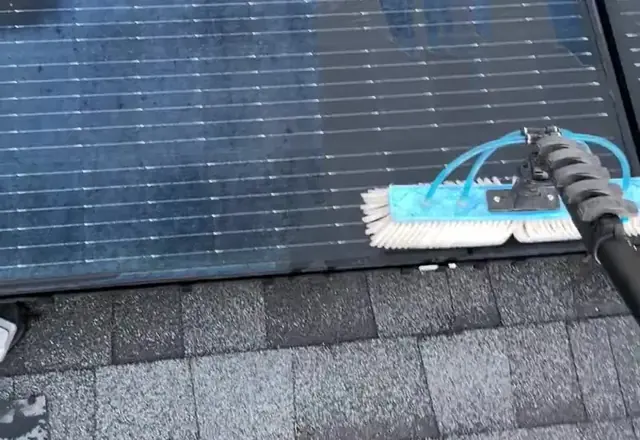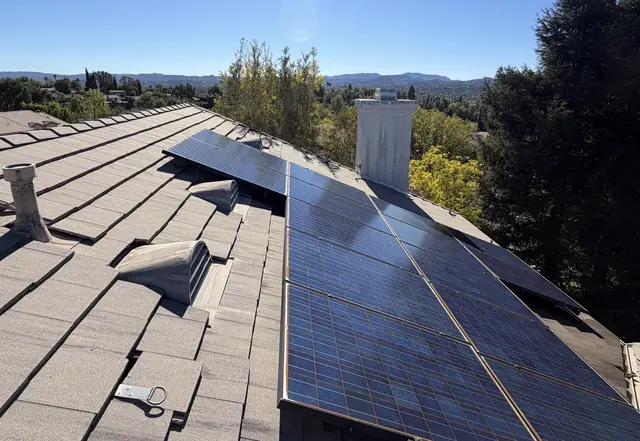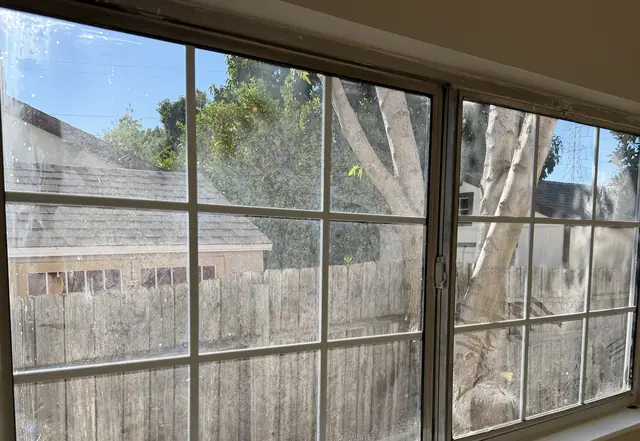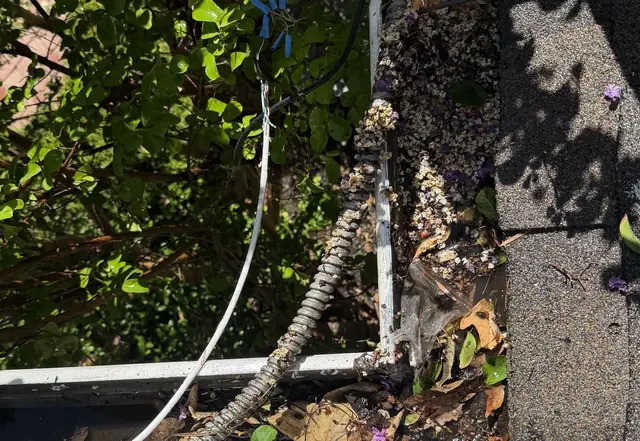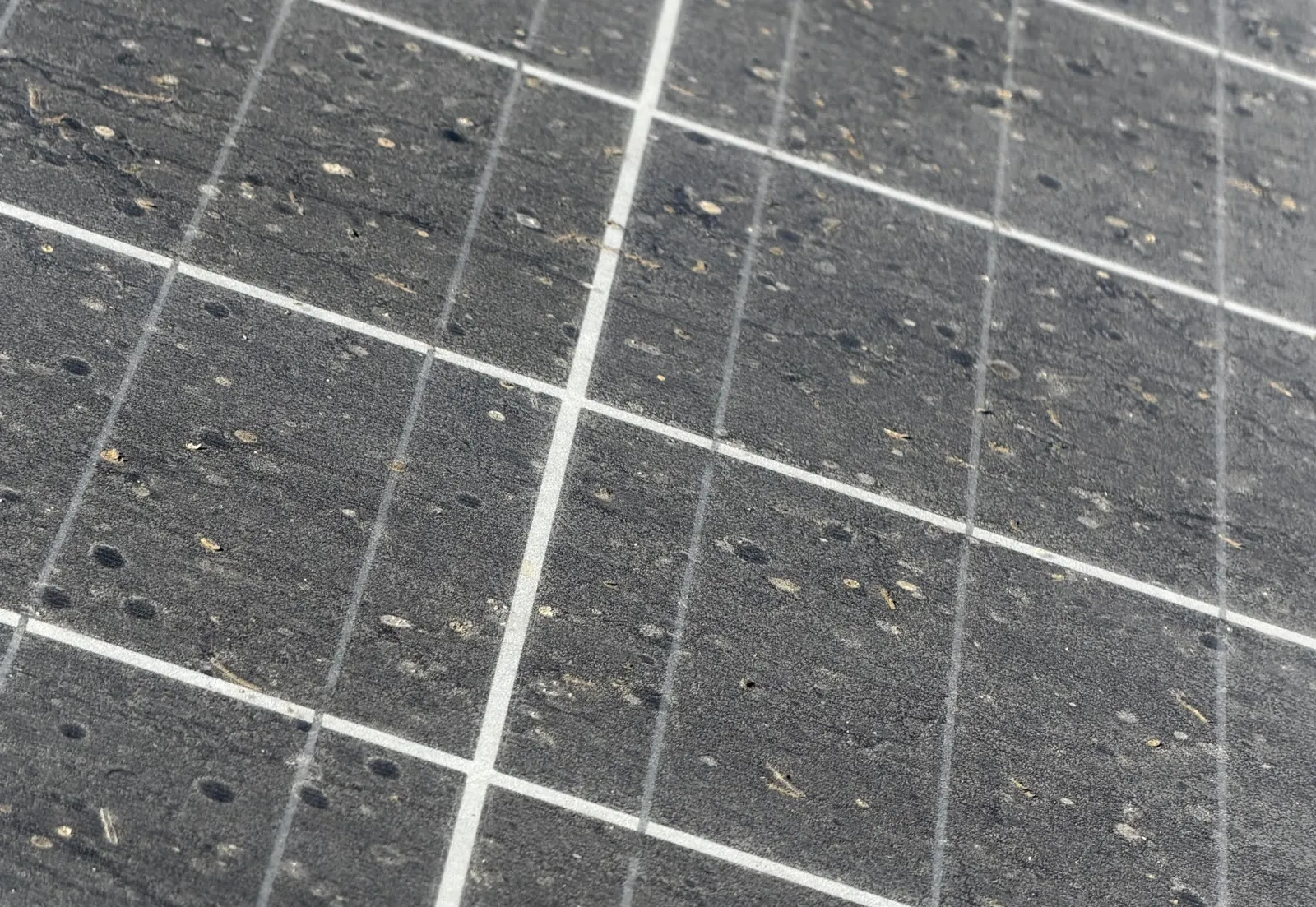
Heavy, steady rain rinses loose dust off solar panels. Light rain often makes them worse, because it wets the dust into mud that dries in spots. Rain does not remove bird droppings, tree sap or a baked-on film. In Southern California there is also almost no rain during peak solar season.
- Heavy rain rinses loose dust.
- Light rain turns dust into mud spots.
- Rain never removes droppings or baked-on film.
What rain does, and what it does not
Rain removes
- Loose, dry dust
- Fresh pollen
- Light ash, in a heavy storm
- Loose leaves on steeper arrays
Rain leaves behind
- Bird droppings
- Tree sap and sticky residue
- A film that has baked on over a dry summer
- Mud lines along the bottom edge of each panel
Why a light rain makes panels look worse
A few minutes of drizzle is not enough water to carry dust off the glass. It just wets it. The dust gathers into drops, the drops dry, and each one leaves a ring of dirt.
You can see the same thing on a car after a light shower. On a solar panel those spots sit right over the cells.
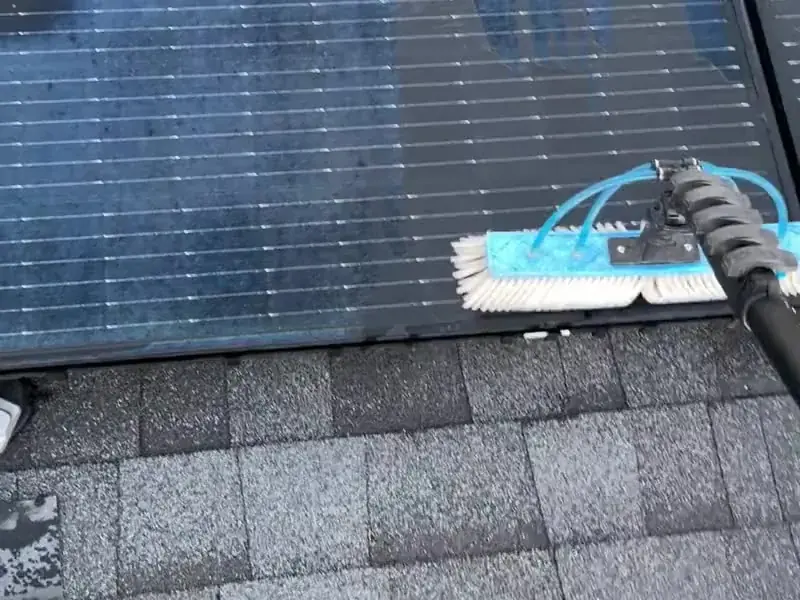
Most panels also have a raised frame around the edge. Water runs down the glass and stops at the lower frame, where it drops its dirt. That brown band along the bottom is where output is lost first.
The timing problem
Rain and peak production happen at opposite ends of the year.