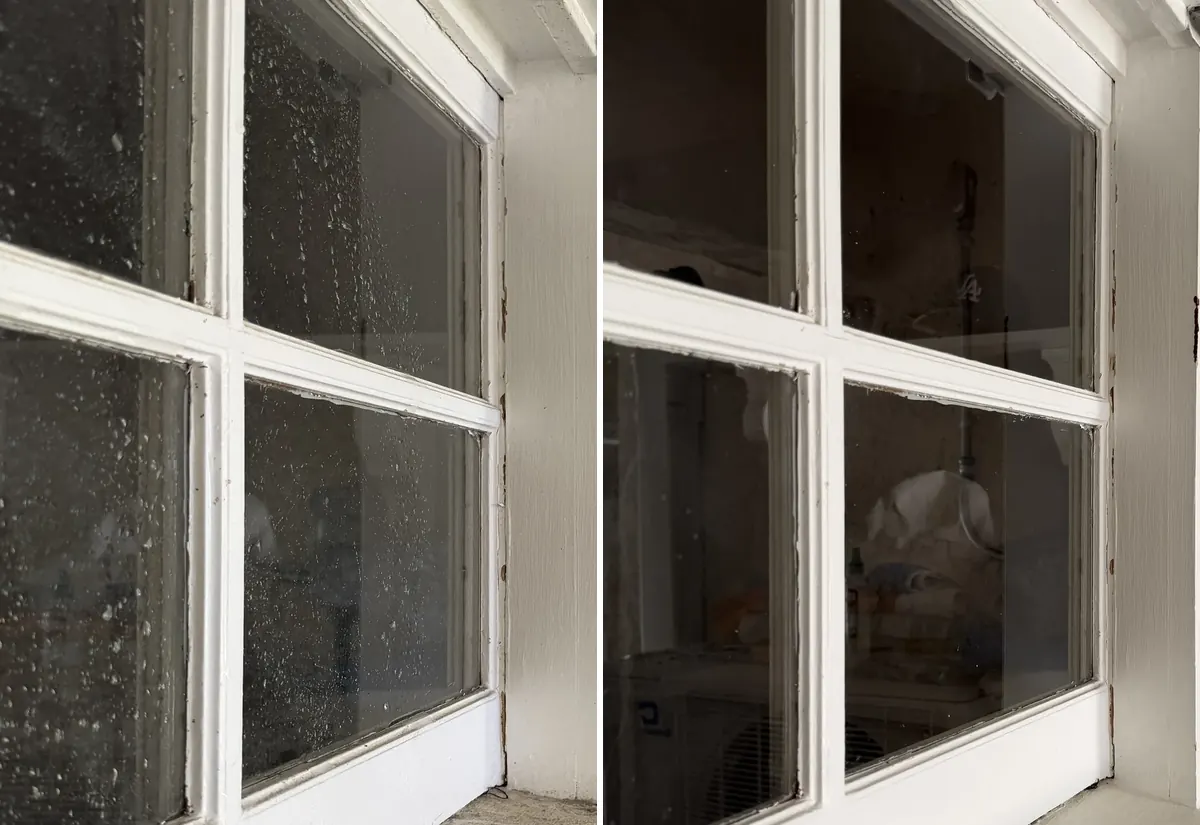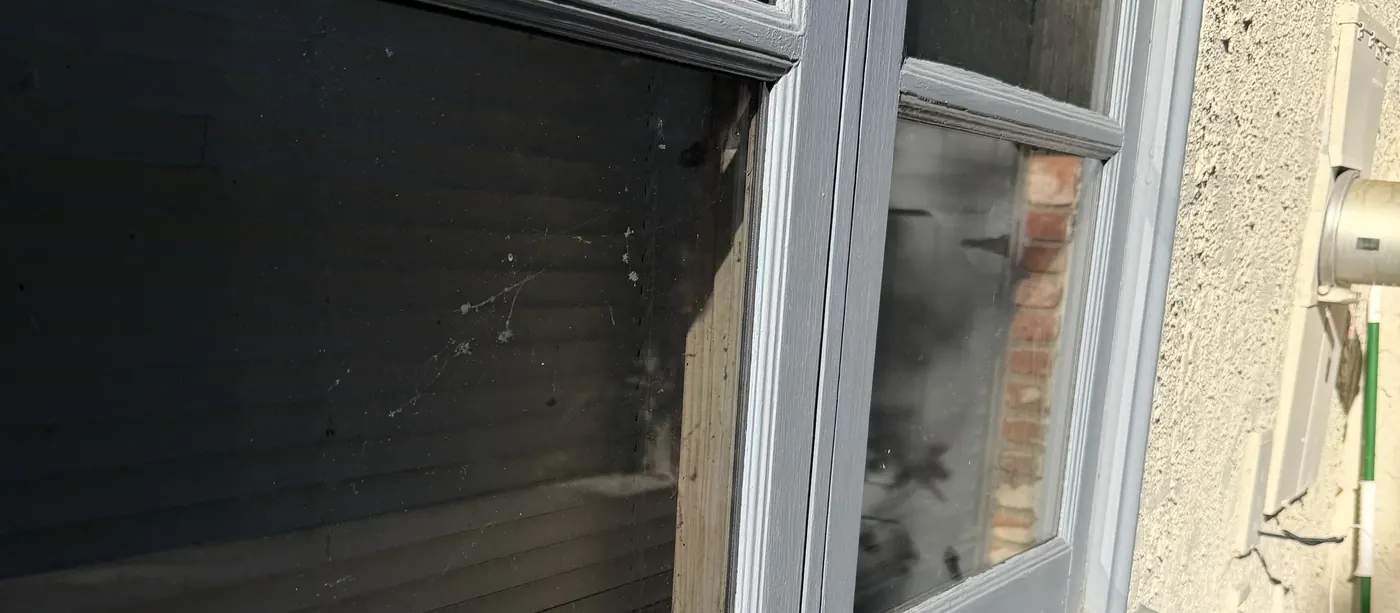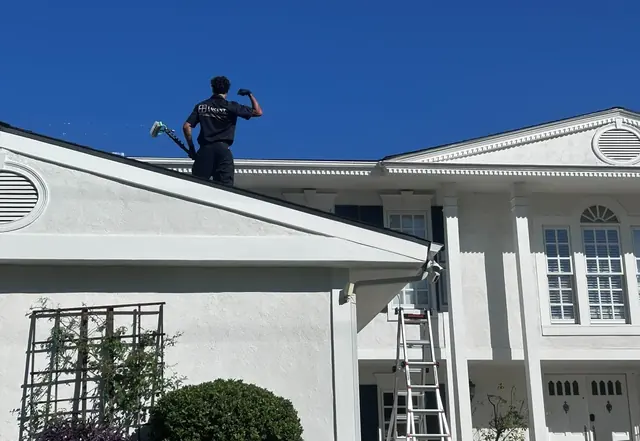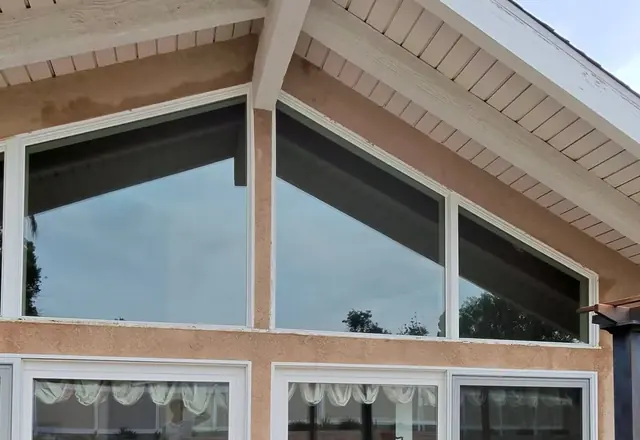
Light hard water stains come off with an acid that dissolves minerals, such as white vinegar and water, left on for a few minutes and then rinsed. Older stains that have bonded with the glass need a professional restoration. The sooner stains are treated, the easier they are to remove.
- Fresh spots dissolve with vinegar and water.
- Built-up scale needs fine bronze wool or a mineral remover.
- Etched glass needs professional restoration.
What a hard water stain really is
Hard water is water with a lot of dissolved calcium and magnesium. When it lands on glass and evaporates, the water leaves and the minerals stay. That chalky white spot is rock, in a very thin layer.
In the Valley, the main source is sprinklers. They hit the same low panes every morning, the sun bakes each coat dry, and the layers build up month after month.
Given enough time, the minerals react with the glass surface itself. At that point the stain is no longer sitting on the glass. It is part of it.
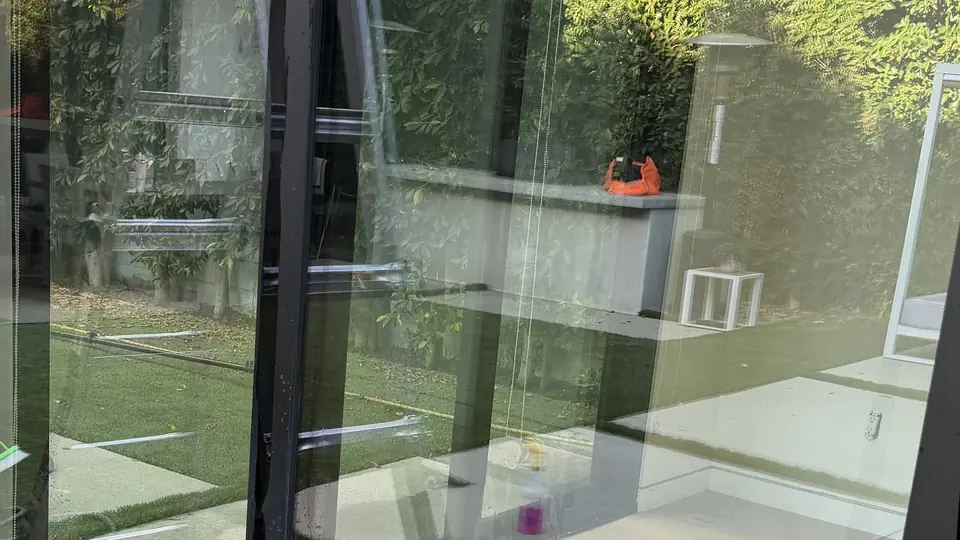
The three stages of hard water damage
| Stage | What you see | What removes it |
|---|---|---|
| 1. Fresh spots | Light white dots that look worse when dry | Vinegar and water, or a normal professional clean |
| 2. Built-up scale | A cloudy band, rough to the touch | Fine bronze wool or a mineral remover made for glass |
| 3. Etching | Haze that stays even when the glass is wet | Professional restoration. Severe cases need new glass |
How to treat light stains at home
- Mix the solution. Equal parts white vinegar and water in a spray bottle.
- Soak the stain. Spray until the glass is wet and let it sit for three to five minutes. Do not let it dry.
- Wipe with a soft cloth. Use a microfiber cloth or a non-scratch pad. Skip anything gritty.
- Rinse well. Rinse with clean water so the loosened minerals do not dry back onto the glass.
- Dry the glass. Squeegee or towel it dry, then check it in the sun.