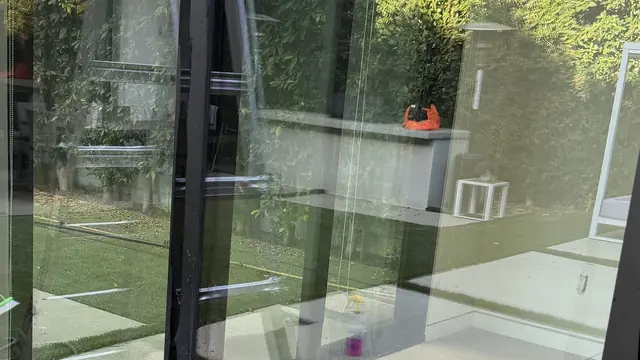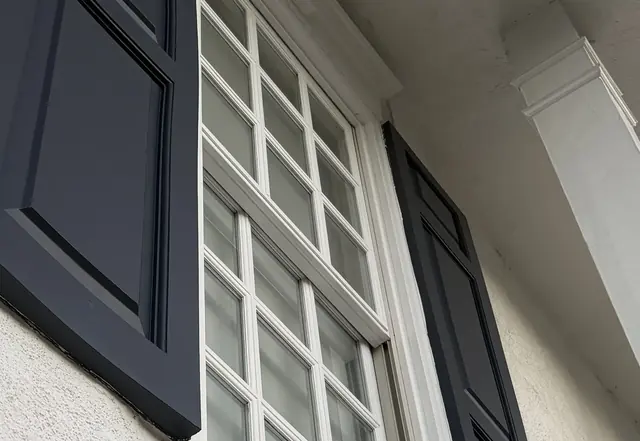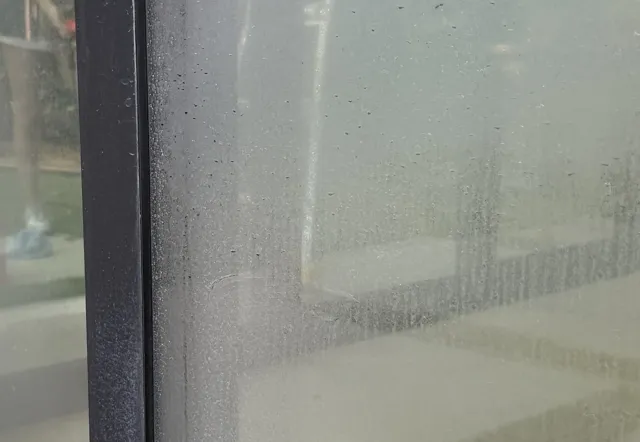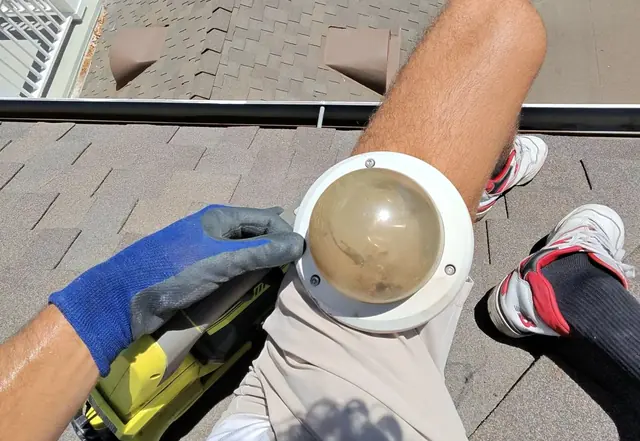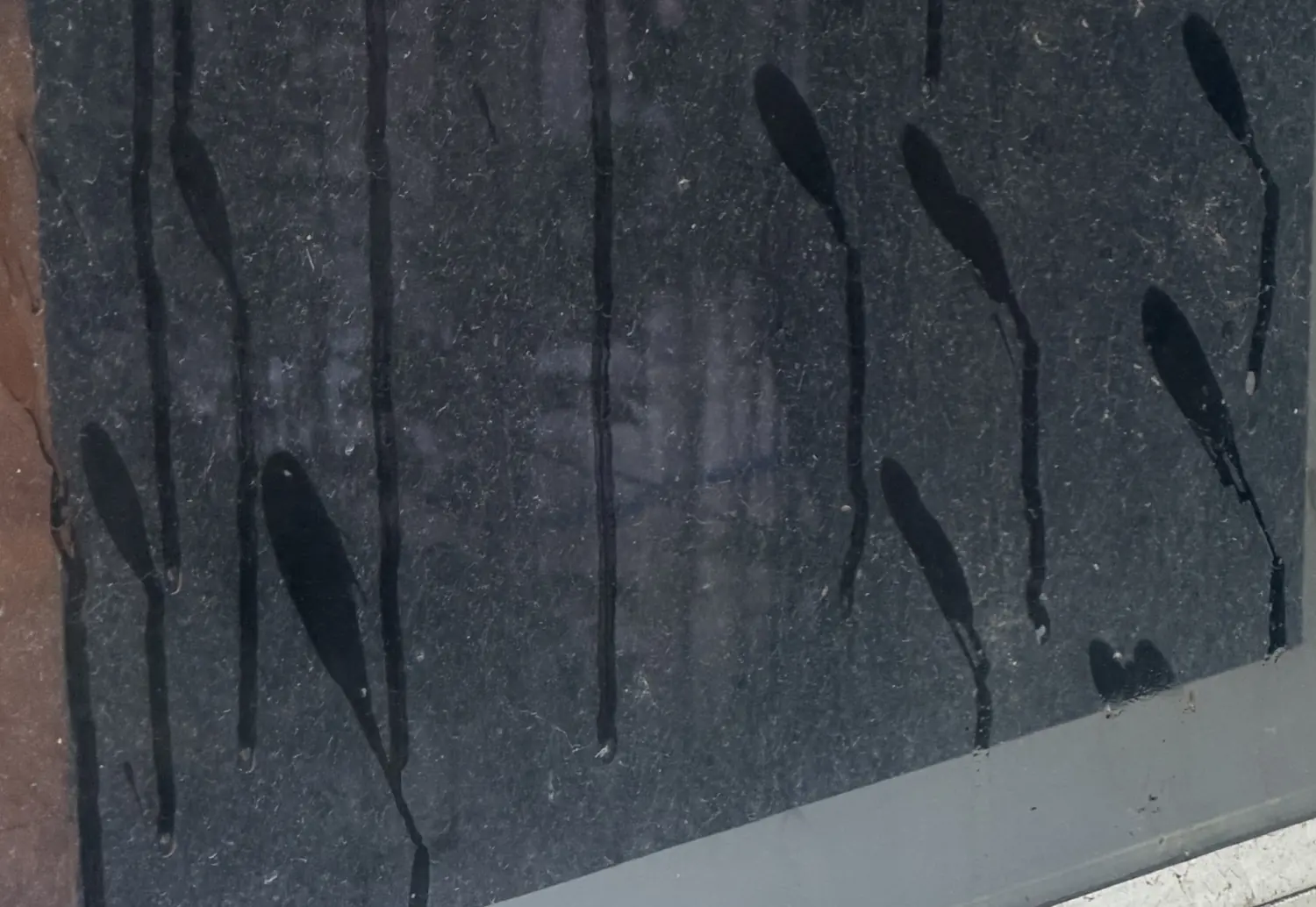
Window glass marked with dried drips and spots

Exterior careOnly a 4 minute readUpdated November 2026 · By Lucent Window Care

Why do my windows streak after cleaning?

The short answer

Windows streak because something is left behind when the water dries. The usual causes are minerals in tap water, too much soap, cleaning in direct sun so the glass dries before you wipe it, and dirty cloths or squeegee blades. Remove the residue and the streaks go with it.

  • Streaks are residue: minerals, soap or lint.
  • Clean cool glass, in the shade, with very little soap.
  • Mineral-free water removes the cause.

The six usual causes

Almost every streak traces back to one of these.

  • Hard tap water. Tap water carries dissolved minerals. When a drop dries, the minerals stay on the glass as a spot or a streak.
  • Too much soap. Extra cleaner does not clean better. It leaves a film that smears the next time you wipe.
  • Hot glass in direct sun. The cleaner dries in seconds, before a cloth or squeegee reaches it, and what dried is now a streak.
  • A dirty cloth or blade. A cloth that is already loaded just moves dirt around. A nicked squeegee blade leaves a line on every pass.
  • Paper towels. They shed lint and push dirt into the corners instead of lifting it off.
  • Skipping the frame and screen. Dirt on the frame and screen runs back onto the wet glass and dries there.

How to get a streak-free window yourself

  1. Pick the right time. Work in the shade or early in the morning, while the glass is cool.
  2. Dust first. Brush or vacuum the frame, sill and screen so loose dirt does not turn to mud.
  3. Use very little soap. A few drops of dish soap in a bucket of water is plenty.
  4. Scrub, then squeegee. Wet the whole pane, then pull the squeegee top to bottom and wipe the blade after every pass.
  5. Detail the edges. Run a dry microfiber cloth around the edges and along the sill to catch the last drops.
Lucent Exterior care

Rather have clear glass without the ladder?

Lucent cleans the glass, frames, sills, tracks and screens with pure water that dries spot-free.

Licensed & insuredFree, exact quotesSpot-free guaranteeSave $50 to $100 a visit with Lucent Plans

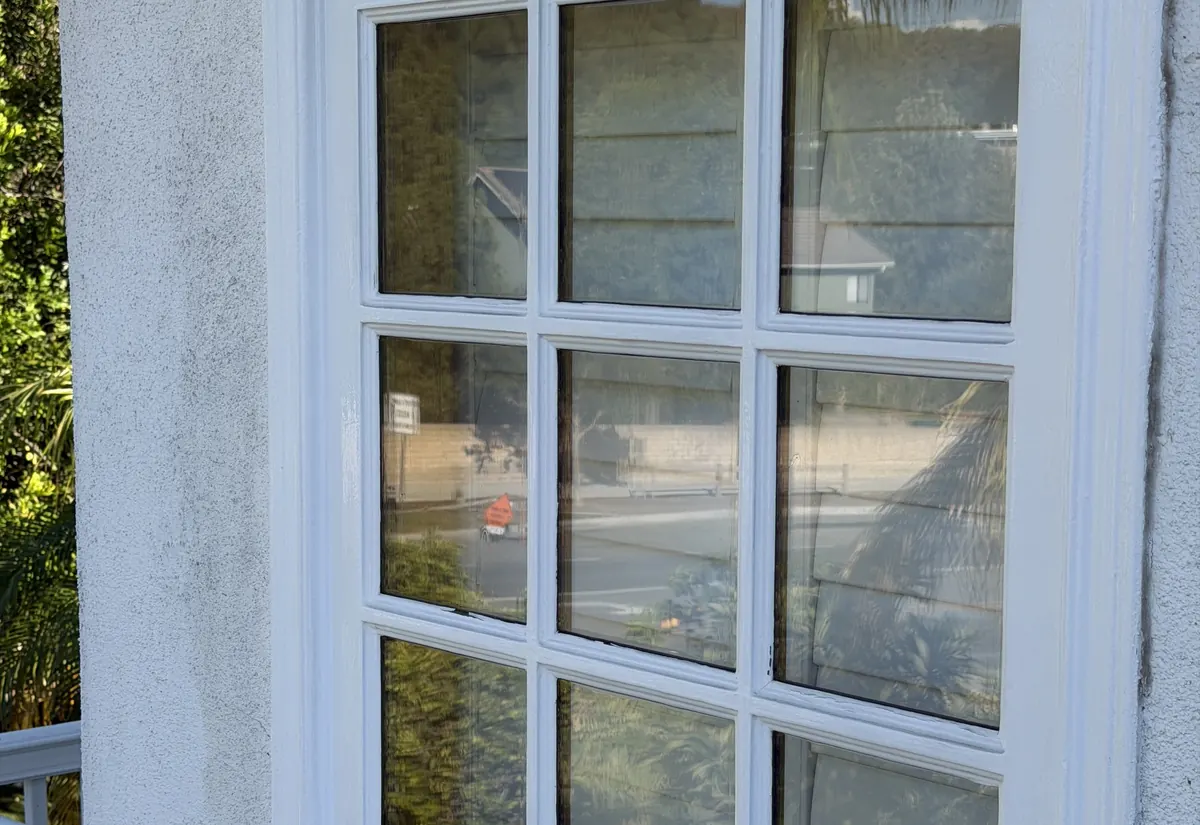
A streak-free nine-pane window on a white home
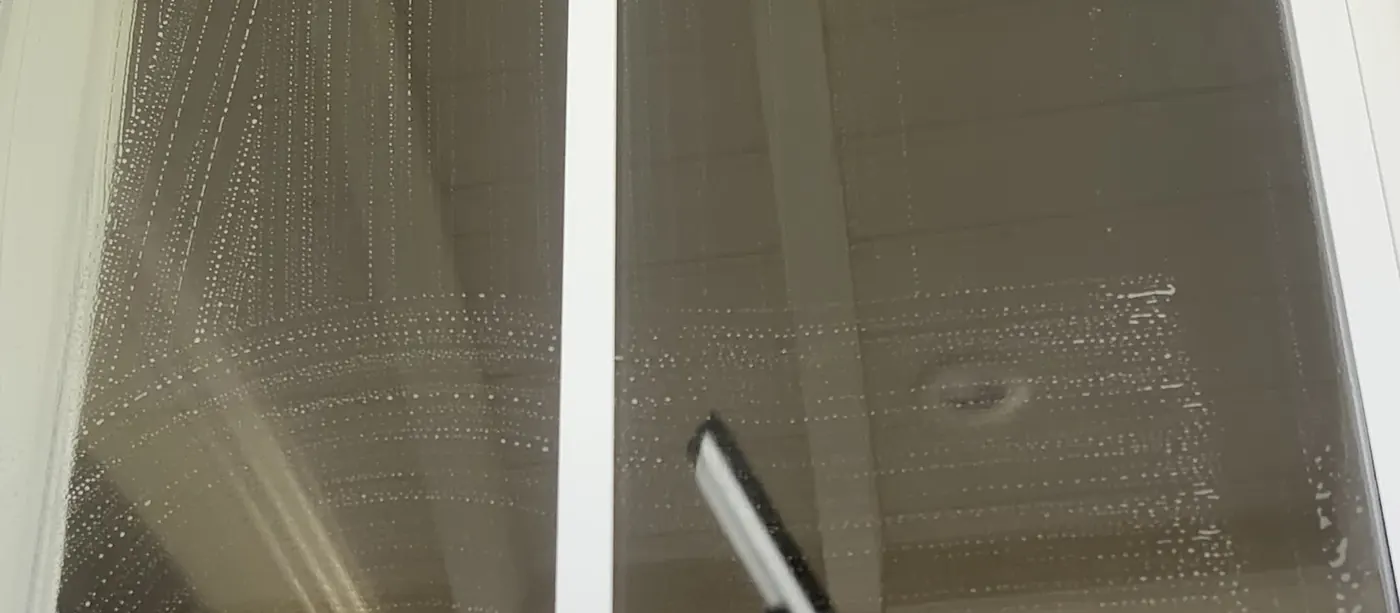
A squeegee pulling water off a window pane

Why professionals rinse with pure water

The surest way to stop streaks is to use water that has nothing in it. Lucent filters water through carbon, reverse osmosis and DI resin until it reads 0 parts per million.

With no minerals left, there is nothing to dry onto the glass. The window can be rinsed and left to dry on its own, and it dries clear. That is how upper windows get cleaned from the ground with a water-fed pole and still come out spot-free.

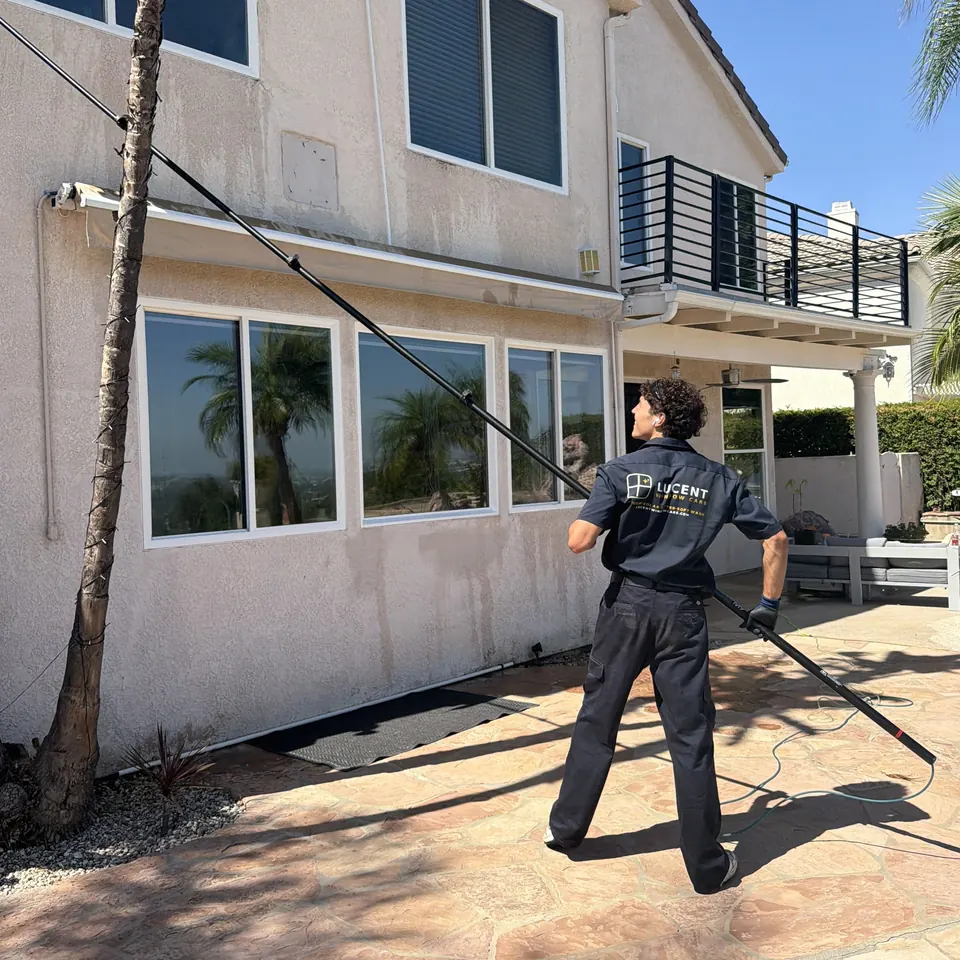
A Lucent technician cleaning a second-story window with a water-fed pole

Streak myths, checked

MythNewspaper gives the best shine.

FactModern newsprint smears ink and falls apart when wet. A clean microfiber cloth works better.

MythMore cleaner means cleaner glass.

FactMore cleaner means more film. Use less than you think you need.

MythA sunny day is the best day to wash windows.

FactSun helps you see dirt, but it dries the glass too fast. Shade gives a better result.

Keep reading

More from the Blog.

A glass door after hard-water restoration, clear through to the yardHow do you remove hard water stains from windows?What works at home, and when the glass needs restoration.Read the article
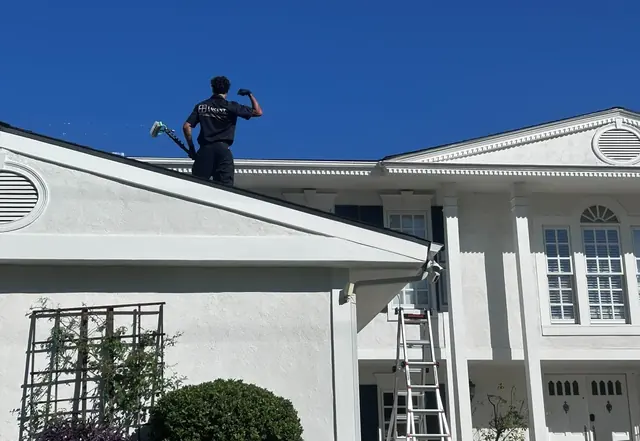
A Lucent technician working with a water-fed pole from a rooftopWhat is pure water window cleaning?How filtered water and a pole clean glass with no soap and no spots.Read the article
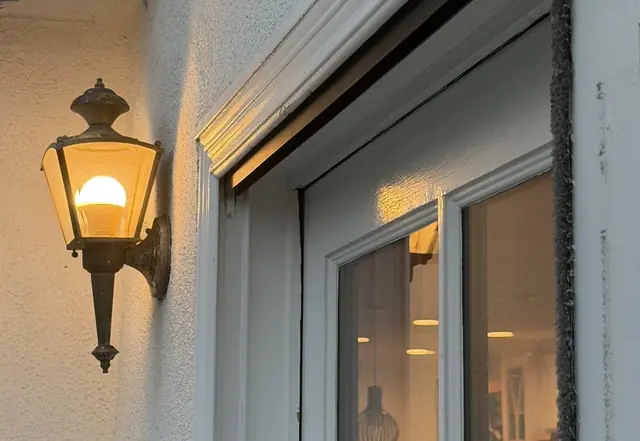
A clean window beside a glowing lantern in evening lightWhen is the best time to clean windows?The best season, the best time of day, and what rain really does.Read the article
A freshly cleaned divided-light window with black shuttersHow often should windows be cleaned?Twice a year suits most homes. Here is when that is not enough.Read the article
A tall wall of windows and French doors on a patioWhat affects the cost of window cleaning?The seven things that move a window cleaning quote up or down.Read the article
Window screens beside a screen cleaner on a lawnHow do you clean window screens and tracks?The step most people skip, and why it undoes a clean window.Read the article
A Lucent technician walking up to a two-story homeIs professional window cleaning worth it?An honest comparison of doing it yourself and hiring it out.Read the article
A glass pane clouded overWhat does moisture between window panes mean?Why it fogs, and why cleaning cannot fix it.Read the article
A technician on a roof checking a downspout outletHow do you unclog a gutter downspout?Four fixes, in the order to try them.Read the article

Window Cleaning near youGlendaleSanta MonicaThousand OaksWestlake VillageAll cities

Questions

Why do my windows look streaky only when the sun hits them?

Low sun lights up any film on the glass. The streaks are there all day, but you only see them when light crosses the window at an angle. A proper rinse removes the film.

Does vinegar stop streaks?

White vinegar and water cuts light film and mineral haze, so it can help. It will not fix streaks caused by a dirty cloth, a worn blade or cleaning in hot sun.

Why are there streaks on the inside of my windows?

Inside glass collects cooking grease, candle soot and fingerprints. Those need a little soap to break down. Water alone smears them.

How do you clean windows without streaks?

Work in the shade, use only a few drops of dish soap in a bucket of water, scrub the pane, then pull a squeegee from top to bottom and wipe the blade after every pass. Finish the edges with a dry microfiber cloth.

What is the best thing to clean windows with?

For do-it-yourself cleaning, a soft scrubber, a good squeegee and a microfiber cloth beat any spray. For exterior glass, professionals use purified water, which dries clear with nothing to wipe.

Why are my windows cloudy after cleaning?

A cloudy haze right after cleaning is usually soap film or minerals from tap water. If the haze stays even when the glass is wet, it may be hard-water etching, or moisture between the panes of a double-pane window with a failed seal.